
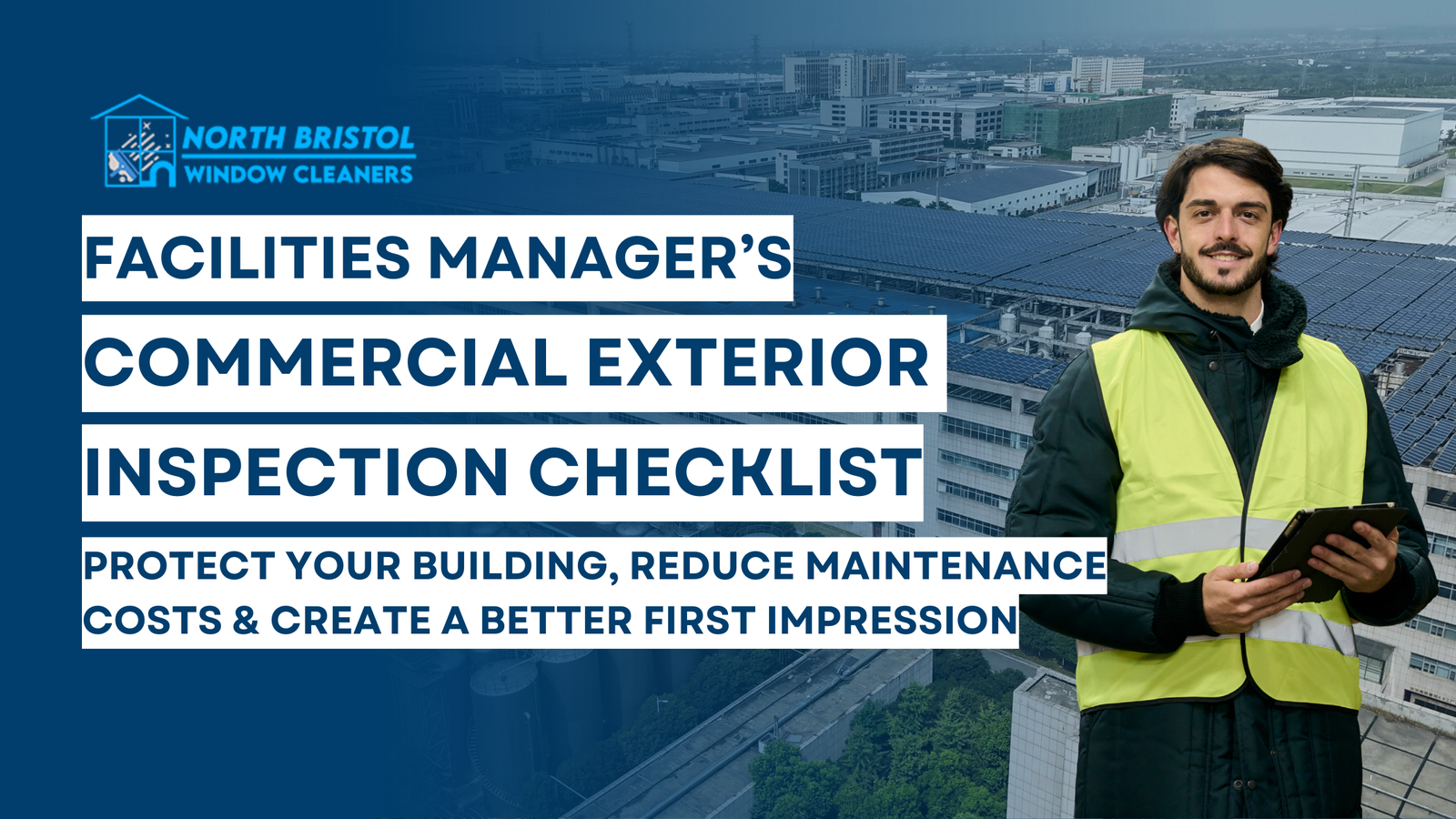
Facilities Manager’s Commercial Exterior Inspection Checklist
Protect Your Building, Reduce Maintenance Costs & Create a Better First Impression
Introduction
Managing a commercial property is about more than responding to maintenance issues as they arise. A proactive inspection programme helps identify potential problems before they become expensive repairs, keeps buildings looking professional, improves safety, and extends the lifespan of exterior surfaces.
Whether you’re responsible for an office building, business park, school, healthcare facility, warehouse, apartment block or retail premises, regular exterior inspections play an important role in protecting your investment.
This guide has been created for facilities managers, property managers, managing agents and building owners looking to implement a practical commercial exterior maintenance programme.
Included within this guide is a free downloadable Commercial Exterior Inspection Checklist that can be used during routine site inspections.
Why Regular Exterior Inspections Matter
Commercial buildings are exposed to the weather every day.
Without routine inspections, small issues can quickly become expensive problems.
Regular inspections help you:
- Identify blocked gutters before they overflow.
- Reduce water ingress and damp.
- Improve the appearance of your premises.
- Maintain a safer environment for staff and visitors.
- Extend the lifespan of windows, rooflines and cladding.
- Plan preventative maintenance rather than reactive repairs.
- Demonstrate a structured maintenance programme.
For facilities managers responsible for multiple sites, a standardised inspection process also improves consistency and simplifies contractor management.
Download Your Free Commercial Exterior Inspection Checklist
Include your downloadable PDF here with a prominent call-to-action.
Commercial Exterior Inspection Checklist
1. Commercial Windows
Clean windows do more than improve appearance—they allow more natural light into the building, enhance your company’s image and help identify damaged glazing before it becomes a larger issue.
Inspect for
- Dirty glass
- Dirty frames
- Dirty sills
- Damaged seals
- Cracked glazing
- Bird fouling
- Water spotting
- Traffic film
Recommended Frequency
- Offices: Every 4–8 weeks
- Retail: Every 2–4 weeks
- Schools: Every 6–8 weeks
- Warehouses: Every 8–12 weeks
2. Gutters & Downpipes
Blocked gutters are one of the most common causes of water damage to commercial properties.
Routine inspections help prevent overflowing gutters, internal leaks and costly repairs.
Inspect for
- Leaves and debris
- Moss
- Plants growing in gutters
- Standing water
- Overflowing gutters
- Loose brackets
- Damaged joints
- Blocked downpipes
Recommended Frequency
Inspect at least twice each year, particularly before and after autumn.
Buildings surrounded by trees may require more frequent inspections.
3. Roofline
The roofline protects the building from water ingress and contributes significantly to its appearance.
Inspect:
- Fascias
- Soffits
- Bargeboards
- External UPVC
- Loose fixings
- Discolouration
4. Cladding
Commercial cladding naturally accumulates dirt, pollution and biological growth.
Routine inspections help identify staining before permanent damage occurs.
Inspect for:
- Green algae
- Black staining
- Bird fouling
- Surface damage
- Oxidation
- Loose panels
5. Render
Rendered buildings require periodic inspections to identify biological growth and surface deterioration.
Inspect for:
- Red algae
- Green algae
- Black staining
- Moss
- Hairline cracks
- Surface deterioration
6. Solar Panels
Dirty solar panels can reduce energy generation.
Inspect for:
- Dust
- Bird fouling
- Moss
- Fallen leaves
- Shading
- Damaged mounting brackets
7. Entrance Areas
The entrance creates the first impression for visitors.
Inspect:
- Glass entrance doors
- Reception glazing
- Signage
- Automatic doors
- Canopies
- Door furniture
8. Car Parks & Walkways
External hard surfaces affect both safety and presentation.
Inspect for:
- Moss
- Algae
- Oil staining
- Loose paving
- Weeds
- Slippery surfaces
- Standing water
9. External Lighting & Signage
Lighting and signage are often overlooked during routine inspections.
Inspect:
- Clean lenses
- Working lamps
- Secure fixings
- Clean signs
- Visible branding
Suggested Inspection Schedule
| Building Element | Recommended Inspection | Typical Cleaning Frequency |
|---|---|---|
| Commercial Windows | Monthly | Every 4–8 weeks |
| Gutters | Twice yearly | Annually or as required |
| Roofline | Annually | Every 12–24 months |
| Cladding | Annually | Every 12–24 months |
| Render | Annually | As required |
| Solar Panels | Every 6 months | Every 6–12 months |
| Signage | Quarterly | Quarterly |
| Car Parks | Monthly | As required |
Common Issues Facilities Managers Should Never Ignore
Overflowing Gutters
Overflowing gutters can quickly lead to water ingress, damp, damaged masonry and expensive repairs.
Algae on Render
Algae growth can permanently stain rendered surfaces if left untreated for long periods.
Dirty Cladding
Traffic film and environmental pollution can affect both the appearance and lifespan of commercial cladding systems.
Damaged Window Seals
Failed seals reduce insulation, allow moisture between panes and often require replacement if not identified early.
Why Preventative Exterior Maintenance Saves Money
Facilities managers are often balancing maintenance budgets across multiple buildings.
Preventative inspections help:
- Reduce emergency call-outs.
- Extend the life of building materials.
- Prevent water damage.
- Improve health and safety.
- Protect company image.
- Reduce long-term maintenance costs.
- Improve contractor planning.
- Support planned preventative maintenance (PPM) programmes.
A structured inspection programme also makes it easier to prioritise repairs and justify maintenance budgets with documented evidence.
Industries We Support
Our commercial exterior cleaning services support a wide range of sectors, including:
- Office Buildings
- Business Parks
- Warehouses
- Industrial Units
- Schools, Colleges & Universities
- Apartment Blocks
- Retail Parks
- Hotels
- Restaurants & Hospitality
- Healthcare Facilities
- Care Homes
- Local Authorities
- Property Management Companies
- Facilities Management Companies
Frequently Asked Questions
How often should commercial buildings be inspected?
Most commercial properties benefit from routine exterior inspections throughout the year, with gutters typically checked at least twice annually and windows cleaned on a planned schedule based on the building type and location.
What is included in a commercial exterior inspection?
A commercial exterior inspection usually covers windows, gutters, downpipes, rooflines, cladding, render, entrance areas, solar panels, signage, external lighting and hard surfaces to identify maintenance issues before they become costly repairs.
Why should facilities managers use an inspection checklist?
A standardised checklist helps ensure consistency across multiple properties, supports planned preventative maintenance (PPM), provides documented inspection records and makes it easier to prioritise repairs and manage contractors.
Can this checklist be used for apartment blocks and managed properties?
Yes. The checklist is suitable for apartment blocks, office buildings, schools, healthcare facilities, warehouses, retail premises and other commercial properties managed by facilities managers, managing agents and property management companies.
Need Help Maintaining Your Commercial Property?
Regular inspections are only one part of an effective maintenance programme. If your property requires professional commercial window cleaning, gutter cleaning, cladding cleaning, render cleaning, roofline cleaning or solar panel cleaning, our team can help.
We work with facilities managers, managing agents and commercial property owners across Bristol to deliver planned exterior cleaning programmes tailored to each building’s requirements.